
Generic Top Level Domains List Update

- 1.
Wait—So What Even *Is* a Generic Top-Level Domain?
- 2.
The OG Crew: The Original 7 Generic Top-Level Domains
- 3.
What Are the 5 Most Popular gTLDs Right Now?
- 4.
Hold Up—How Many Types of Domains Are There, Anyway?
- 5.
How Do You Even Check If a TLD Is Available? (Spoiler: It’s Easy)
- 6.
The Wild West Era: How ICANN Flooded the Market With New gTLDs
- 7.
Why Your Choice of gTLD Impacts SEO (More Than You Think)
- 8.
Hidden Gems in the Generic Top Level Domains List You Might’ve Missed
- 9.
Watch Out for These gTLD Scams & Traps
- 10.
Where to Explore the Full Generic Top Level Domains List & Make Your Move
Table of Contents
generic top level domains list
Wait—So What Even *Is* a Generic Top-Level Domain?
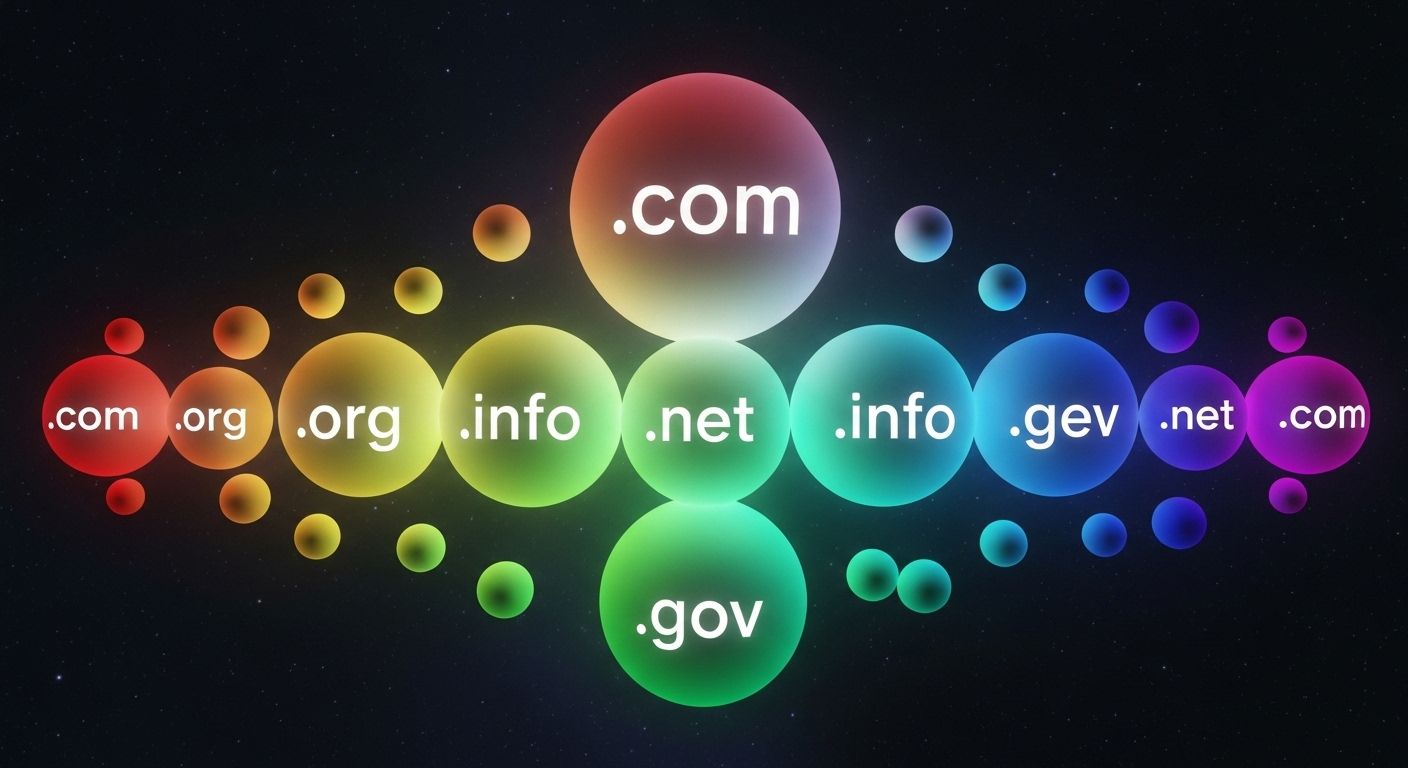
Ever typed “.com” without thinkin’ twice? Or scrolled past a weird “.xyz” and wondered, “Who in tarnation approved that?” Well, friend, you’ve been dancin’ through the world of generic top level domains list entries without even knowin’ it. A generic top-level domain (gTLD) is the suffix at the end of a web address—like .com, .net, or .pizza (yep, that’s real). Unlike country-code TLDs (like .uk or .jp), gTLDs are global, open to anyone, and managed under ICANN’s watchful eye [[1]]. The generic top level domains list has exploded from just 7 in the ‘90s to over **1,200** today—thanks to ICANN’s 2012 expansion program [[2]]. So yeah, your bakery *can* be “crustypie.bakery.” If you’re into that kinda thing.
The OG Crew: The Original 7 Generic Top-Level Domains
Back in the early internet days—when dial-up screeches were the soundtrack of life—there were only seven gTLDs. These bad boys formed the backbone of the generic top level domains list for decades: - .com (commercial) - .org (organization) - .net (network) - .edu (education) - .gov (U.S. government) - .mil (U.S. military) - .int (international treaties) Now, only .com, .org, and .net are truly open to the public; the rest got locked down tighter than Fort Knox. But these originals still dominate traffic—especially .com, which holds over **45% of all domains** globally [[3]]. Nostalgia’s cute, but let’s be real: the generic top level domains list ain’t stuck in the ‘90s anymore.
What Are the 5 Most Popular gTLDs Right Now?
If you’re scoutin’ for clout (or SEO juice), stick with the heavy hitters. As of 2026, the top five entries on the generic top level domains list by registration volume are: 1. **.com** – The undisputed king (~160 million domains) 2. **.xyz** – Cheap, trendy, and oddly popular in crypto circles 3. **.net** – The OG runner-up for tech and infrastructure 4. **.org** – Nonprofits, activists, and idealists unite! 5. **.info** – For when you just wanna share… info, I guess? Fun fact: .xyz surged after Google used it for Alphabet Inc.’s URL (abc.xyz)—proof that celeb endorsements work even in domain land [[4]]. Still, if you want trust and recognition, .com’s your golden ticket. The rest? Cool experiments, but not always conversion machines.
Hold Up—How Many Types of Domains Are There, Anyway?
You asked: “What are the 7 types of domains?” Well, technically, there are **more than 7**, but here’s the clean breakdown most folks mean: 1. **gTLDs** (generic): .com, .shop, .blog 2. **ccTLDs** (country-code): .us, .de, .ca 3. **sTLDs** (sponsored): .edu, .gov (restricted use) 4. **Infrastructure TLD**: Just .arpa—used for tech backend stuff 5. **New gTLDs**: Post-2012 additions like .app, .dev 6. **Brand TLDs**: Custom ones like .google or .bmw 7. **Internationalized TLDs**: Non-Latin scripts like .在线 (Chinese for “online”) The generic top level domains list mainly covers #1 and #5—but don’t sleep on the others. Your choice shapes how users see you. A .lawyer screams niche authority; a .tk (free ccTLD) screams “sketchy link.” Choose wisely, y’all.
How Do You Even Check If a TLD Is Available? (Spoiler: It’s Easy)
Wanna snag “yourbrand.pizza” before some food blogger beats you to it? First, head to any legit registrar (like Namecheap or Porkbun) and type it in their search bar. If it’s unregistered, boom—you can buy it. But here’s the kicker: availability ≠ eligibility. Some gTLDs have restrictions. For example, .bank requires financial licensing, and .kids must comply with child safety standards [[5]]. Always read the fine print! Also, use ICANN’s official TLD directory to verify if a suffix is part of the real generic top level domains list—not some scammy imitation. And pro tip: avoid registrars that auto-suggest obscure TLDs just ‘cause they’re cheap. That .click domain might cost $1.99 today… and haunt your brand forever.
The Wild West Era: How ICANN Flooded the Market With New gTLDs
Remember 2012? When ICANN dropped the gates and said, “Y’all wanna run a .ninja domain? Go nuts!” Over 1,900 applications poured in, and by 2014, the generic top level domains list went from sleepy to chaotic. Brands rushed to protect their names (.apple, .ford), cities claimed theirs (.nyc, .london), and meme lords grabbed .fail and .wtf. Critics called it a cash grab; supporters hailed it as digital democracy. Truth? Both. While many new gTLDs flopped (RIP .sucks at $2,400/year), others thrived—like .app (backed by Google) and .io (beloved by startups). The lesson? Novelty fades; utility wins. Pick a TLD that *serves* your audience, not just your ego.
Why Your Choice of gTLD Impacts SEO (More Than You Think)
Google says all gTLDs are treated equally in search rankings—and technically, they are. But user behavior? That’s another story. Studies show **.com domains get 35% more organic clicks** than alternatives, simply ‘cause folks trust ‘em [[6]]. Type “best shoes” into Google, and you’ll rarely see a .shoes result on page one. Why? Not algorithm bias—user bias. If your TLD looks spammy (.loan, .review), bounce rates spike. But niche gTLDs like .photography or .design? They can boost relevance *if* your site delivers. So while the generic top level domains list offers creative freedom, remember: clarity trumps cleverness. Don’t make users squint to read your URL.
Hidden Gems in the Generic Top Level Domains List You Might’ve Missed
Beyond the usual suspects, the generic top level domains list hides some legit useful gems: - **.dev**: HTTPS-enforced, perfect for developers - **.page**: Great for landing pages or portfolios - **.store**: E-commerce clarity without extra words - **.tech**: Instantly signals your industry - **.ai**: Hot for artificial intelligence startups (and priced like it—$70+/year!) These aren’t just vanity—they’re semantic signals. A .health site gets taken more seriously by wellness audiences than a .info. And hey, if you’re buildin’ a global brand, avoid TLDs that mean somethin’ awkward in other languages (*cough* .is *cough*). The generic top level domains list is your branding toolkit—use it like one.
Watch Out for These gTLD Scams & Traps
Not all that glitters in the generic top level domains list is gold. Watch for: - **Fake TLDs**: Sites advertisin’ “.insta” or “.fb”—those don’t exist! - **Renewal traps**: $1 first-year deals that jump to $50/year - **Privacy upsells**: Hidden fees for WHOIS protection - **Registry shutdowns**: Rare, but if a gTLD operator goes bust, your domain could vanish Always verify TLDs via ICANN’s official list [[2]]. And if a deal feels too good? It prob’ly is. Stick with reputable ICANN approved registrars—they won’t sell you vaporware. Your domain’s your digital home; don’t let con artists hand you a cardboard box.
Where to Explore the Full Generic Top Level Domains List & Make Your Move
Ready to claim your slice of the namespace? Start by browsin’ the official ICANN gTLD registry—but honestly, it’s a spreadsheet nightmare. Instead, swing by Peternak Digital for curated picks that actually make sense for real humans. Dive into our Domains section for TLD comparisons, renewal tips, and auth code guides. And if you’re curious about international quirks, don’t miss our deep dive on Int Domain Names Usage. The generic top level domains list is vast—but with the right intel, you’ll find the perfect fit without losin’ your shirt.
Frequently Asked Questions
What are the 5 top-level domains?
The five most widely used generic top-level domains (gTLDs) as of 2026 are .com, .xyz, .net, .org, and .info. These dominate the generic top level domains list in terms of total registrations, with .com alone accounting for nearly half of all domain names worldwide [[3]].
What are the 7 types of domains?
The seven broad categories of domain types include: generic TLDs (gTLDs), country-code TLDs (ccTLDs), sponsored TLDs (sTLDs), infrastructure TLD (.arpa), new gTLDs (post-2012), brand TLDs, and internationalized domain name (IDN) TLDs. Only gTLDs appear on the standard generic top level domains list maintained by ICANN [[5]].
What are the top 10 domains?
The top 10 most registered domains globally combine gTLDs and ccTLDs, but within the generic top level domains list, the leaders are .com, .xyz, .net, .org, .info, .top, .site, .club, .online, and .shop—driven by affordability, marketing, and niche relevance [[3]].
How do I check if a TLD is available?
To check if a TLD is available, visit any ICANN accredited registrar (like Namecheap or GoDaddy), enter your desired domain name, and see if the combination is unregistered. Always cross-reference the TLD against the official generic top level domains list on ICANN’s website to ensure it’s legitimate and not restricted [[2]].
References
- https://www.icann.org/en/system/files/files/gtld-registry-agreements-25feb20-en.pdf
- https://www.icann.org/en/gtlds
- https://domainnamestat.com/statistics/tld
- https://en.wikipedia.org/wiki/List_of_Internet_top-level_domains
- https://www.registry.google/